When a toilet won’t flush, drains slowly, or starts filling with water, most homeowners have one question:
What should I use to unclog it?
For many toilet clogs, the first tool people reach for is a traditional plunger. But when plunging doesn’t work, homeowners often turn to a toilet auger, also called a closet auger.
Both tools have their place, but they work in very different ways.
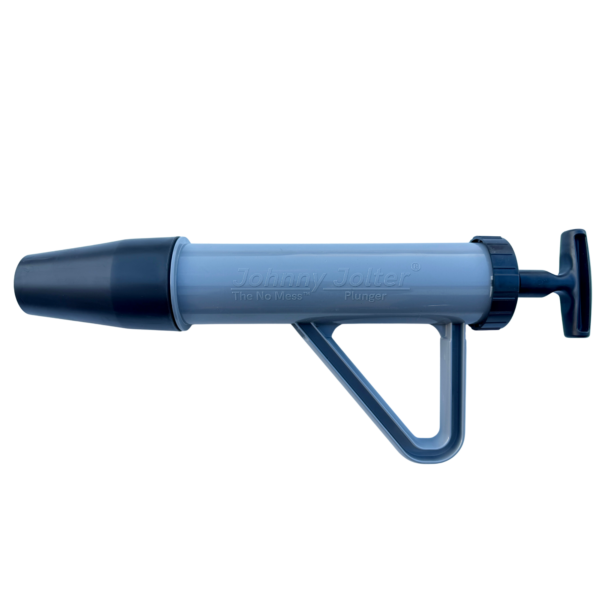
A traditional plunger uses pressure and suction to move a blockage. A toilet auger physically reaches into the toilet trapway to break apart or retrieve an obstruction. A hydraulic plunger, such as the Johnny Jolter No-Mess Plunger, takes a different approach by using water pressure to deliver powerful force through the toilet’s trapway.
So which toilet unclogging tool is best?
The answer depends on the type of clog, where the blockage is located, and how effectively your tool can transfer force to the obstruction.
In this guide, we’ll compare traditional plungers, hydraulic plungers, and toilet augers so you can determine which tool is right for your next clogged toilet.
How Does a Traditional Toilet Plunger Work?
A traditional toilet plunger works by creating a seal around the toilet drain opening and moving air and water back and forth through the trapway.
The goal is to create enough pressure to dislodge the blockage.
In theory, this is a simple and effective solution.
In practice, however, traditional plungers can have several limitations.
A traditional plunger may:
- Lose its seal
- Compress air instead of efficiently transferring force
- Require repeated plunging
- Create splashback
- Move a clog without completely clearing it
- Struggle with certain modern toilet designs
This is why many homeowners find themselves repeatedly plunging the same toilet.
The clog appears to be gone, but the toilet starts backing up again days or weeks later.
How Does a Hydraulic Toilet Plunger Work?
A hydraulic toilet plunger uses water pressure to attack a clog.
Unlike traditional plungers that rely heavily on trapped air, hydraulic plungers use water as the primary force-transfer medium.
Because water is essentially incompressible under normal household conditions, pressure can be transferred efficiently through the water inside the toilet trapway.
The result is a concentrated pressure surge designed to push the blockage through the plumbing system.
This makes hydraulic plungers particularly appealing for:
- Stubborn toilet clogs
- Low-flow toilet blockages
- Recurring toilet clogs
- Compact toilet paper blockages
- Partial trapway obstructions
The Johnny Jolter No-Mess Plunger was designed around this hydraulic principle, giving homeowners a powerful alternative to traditional rubber plungers.
How Does a Toilet Auger Work?
A toilet auger is a mechanical tool designed specifically for toilet clogs.
Unlike a plunger, which attempts to move the obstruction with pressure, an auger physically reaches into the toilet’s trapway.
The auger’s cable can:
- Break apart an obstruction
- Push through a blockage
- Hook certain objects
- Retrieve foreign objects
A toilet auger is particularly useful when you suspect something solid is lodged inside the toilet.
Examples might include:
- A child’s toy
- A small object
- A heavy buildup
- An obstruction that pressure alone cannot move
However, using an auger requires more effort and care than using a plunger. Improper use can potentially scratch the porcelain surface of a toilet.
Plunger vs. Toilet Auger: Which Should You Use First?
For most ordinary toilet clogs, a plunger should be your first tool.
A plunger is:
- Faster to use
- Easier to store
- Simpler for homeowners
- Less invasive
- Effective for many common clogs
A toilet auger is generally better suited for situations where:
- The clog is deep
- A solid object is suspected
- Plunging has failed
- The obstruction cannot be moved with pressure
The best approach is to think of these tools as complementary rather than competing.
Start with pressure.
Move to mechanical removal when necessary.
Why Hydraulic Pressure Can Be a Better First Step
A traditional plunger may be the tool most people know, but hydraulic pressure offers a different approach to clearing toilet clogs.
Instead of relying primarily on air pressure and repeated plunging, a hydraulic plunger uses water to transfer force through the trapway.
This can provide several advantages.
More Efficient Force Transfer
Water does not compress like air, allowing force to travel through the water column more efficiently.
Targeted Pressure
Hydraulic pressure can be directed toward the blockage rather than relying on broad, repetitive plunging movements.
Better for Modern Toilets
Low-flow toilets use less water and often have different internal designs than older toilets. A hydraulic plunger can provide additional clearing force when the toilet’s normal flush isn’t enough.
Less Repetitive Effort
A concentrated pressure surge may clear certain clogs more efficiently than dozens of traditional plunging attempts.
What Is the Best Tool for a Low-Flow Toilet?
Low-flow toilets are designed to conserve water, but some homeowners experience more frequent clogs or weak flushing performance.
If your low-flow toilet frequently experiences:
- Slow drainage
- Partial blockages
- Weak flushing
- Toilet paper buildup
- Recurring clogs
A hydraulic toilet plunger can be an excellent tool to keep available.
The Johnny Jolter No-Mess Plunger is designed to use hydraulic pressure to help clear toilet clogs without relying on the traditional suction-based approach.
For homeowners with modern low-flow toilets, having a hydraulic plunger readily available can provide an effective first line of defense against unexpected backups.
What Is the Best Tool for a Deep Toilet Clog?
If a clog is located deep inside the toilet trapway, the right tool depends on the type of obstruction.
For soft blockages such as:
- Toilet paper
- Waste
- Organic material
Pressure-based solutions may be effective.
For hard or solid objects, a toilet auger may be more appropriate.
The key is identifying the problem before choosing the tool.
If you suspect a toy, bottle, or other solid object has been flushed down the toilet, avoid repeatedly forcing it deeper into the plumbing system.
Can a Plunger and Toilet Auger Be Used Together?
Yes.
In fact, having both tools available is an excellent idea for homeowners.
A good strategy is:
Step 1: Stop flushing the toilet.
Step 2: Try a high-performance plunger or hydraulic plunger.
Step 3: If the blockage remains, consider using a toilet auger.
Step 4: If the toilet continues to clog or multiple drains are affected, contact a plumbing professional.
This gives you a logical progression from the simplest solution to a more invasive approach.
Why the Right Plunger Matters
Not all toilet plungers are created equally.
The quality and design of your plunger can make the difference between:
One quick unclogging attempt
and
Twenty minutes of frustrating, messy plunging.
Traditional plungers can struggle with:
- Poor seals
- Weak pressure
- Splashback
- Modern toilet designs
- Recurring partial clogs
A hydraulic plunger approaches the problem differently.
By using water pressure rather than relying primarily on air, the goal is to deliver more effective force directly toward the blockage.
That’s the principle behind the Johnny Jolter No-Mess Plunger.
Why Homeowners Keep a Johnny Jolter on Hand
The best time to buy a toilet plunger isn’t when your bathroom is already flooding.
It’s before the emergency happens.
Keeping a Johnny Jolter No-Mess Plunger in your home means you have a dedicated tool ready when:
- Your toilet suddenly backs up
- Your low-flow toilet won’t flush properly
- A stubborn clog appears
- Your traditional plunger fails
- You want a cleaner alternative to conventional plunging
A high-quality toilet plunger is one of the simplest and most affordable tools a homeowner can keep in their plumbing toolkit.
When Should You Stop Plunging and Call a Plumber?
While many toilet clogs can be handled with the right tools, some problems require professional attention.
Contact a plumber if:
- Multiple drains are backing up
- Your shower fills with water when the toilet flushes
- Several toilets are clogged simultaneously
- You hear persistent gurgling throughout the home
- Sewage is backing up
- The toilet repeatedly clogs despite proper clearing attempts
These symptoms may indicate a blockage in the main sewer line or another plumbing problem beyond the toilet itself.
A plunger is an excellent first-line tool, but it cannot solve every plumbing issue.
The Bottom Line: Plunger or Toilet Auger?
The best tool depends on the problem.
| Tool | Best For | Primary Method |
| Traditional Toilet Plunger | Basic toilet clogs | Air and water pressure |
| Hydraulic Plunger | Stubborn and recurring clogs | Water pressure |
| Toilet Auger | Deep or solid obstructions | Mechanical removal |
| Professional Plumber | Main line and complex plumbing issues | Professional diagnosis and equipment |
For the average homeowner, a hydraulic toilet plunger should be one of the first tools to reach for when a toilet becomes clogged.
A toilet auger is an excellent second-line tool when pressure alone isn’t enough or when you suspect a solid obstruction.
The key is having the right tool before the problem becomes an emergency.
Why Choose the Johnny Jolter No-Mess Plunger?
The Johnny Jolter No-Mess Plunger was created for homeowners who want a better way to handle toilet clogs.
Instead of relying solely on traditional suction and repetitive plunging, Johnny Jolter uses hydraulic pressure to help deliver powerful unclogging force through the toilet trapway.
It’s designed for homeowners who want:
- Powerful hydraulic unclogging action
- A cleaner alternative to traditional plungers
- A solution for stubborn toilet clogs
- Better performance on modern low-flow toilets
- A reliable tool for their home plumbing toolkit
When your toilet won’t flush, you shouldn’t have to wonder whether your old rubber plunger will actually work.
You should have a tool designed to get the job done.
Upgrade your toilet clog solution with the Johnny Jolter No-Mess Plunger and experience a cleaner, more powerful approach to unclogging your toilet.
Frequently Asked Questions About Toilet Clogs
Is a toilet auger better than a plunger?
Not necessarily. Each tool is designed for different situations. A plunger is generally the first tool to try for common soft clogs, while a toilet auger is better suited for deeper or solid obstructions. A hydraulic plunger offers another option by using water pressure to attack the blockage.
What is the best plunger for a clogged toilet?
The best plunger depends on the toilet and the type of clog. For modern low-flow toilets and stubborn blockages, a hydraulic water-powered plunger such as the Johnny Jolter No-Mess Plunger offers a powerful alternative to traditional rubber plungers.
Can a hydraulic plunger unclog a low-flow toilet?
Yes. Hydraulic plungers are designed to use water pressure to help clear blockages and can be particularly useful for modern low-flow toilets where reduced flush volume may contribute to clogging problems.
Should I use a plunger or a toilet auger first?
For most common toilet clogs, start with a quality plunger. If the clog doesn’t clear or you suspect a solid object is lodged in the trapway, a toilet auger may be the next appropriate tool.
Why does my toilet keep clogging?
Recurring toilet clogs can be caused by excessive toilet paper, foreign objects, partial blockages, hard water buildup, low-flow toilet performance, or problems deeper in the plumbing system. If the clog repeatedly returns after proper clearing, professional inspection may be necessary.
Build Your Home Plumbing Toolkit
A clogged toilet can happen at any time. Don’t wait until water is rising in the bowl to discover that your old plunger isn’t up to the job.
Equip your home with the right tools, understand how they work, and know when to use them.
For everyday toilet clogs, a high-performance hydraulic plunger like the Johnny Jolter No-Mess Plunger can give homeowners a cleaner, more powerful first line of defense before reaching for a toilet auger or calling a plumber.
When the toilet won’t flush, reach for the tool designed to help get things moving again.